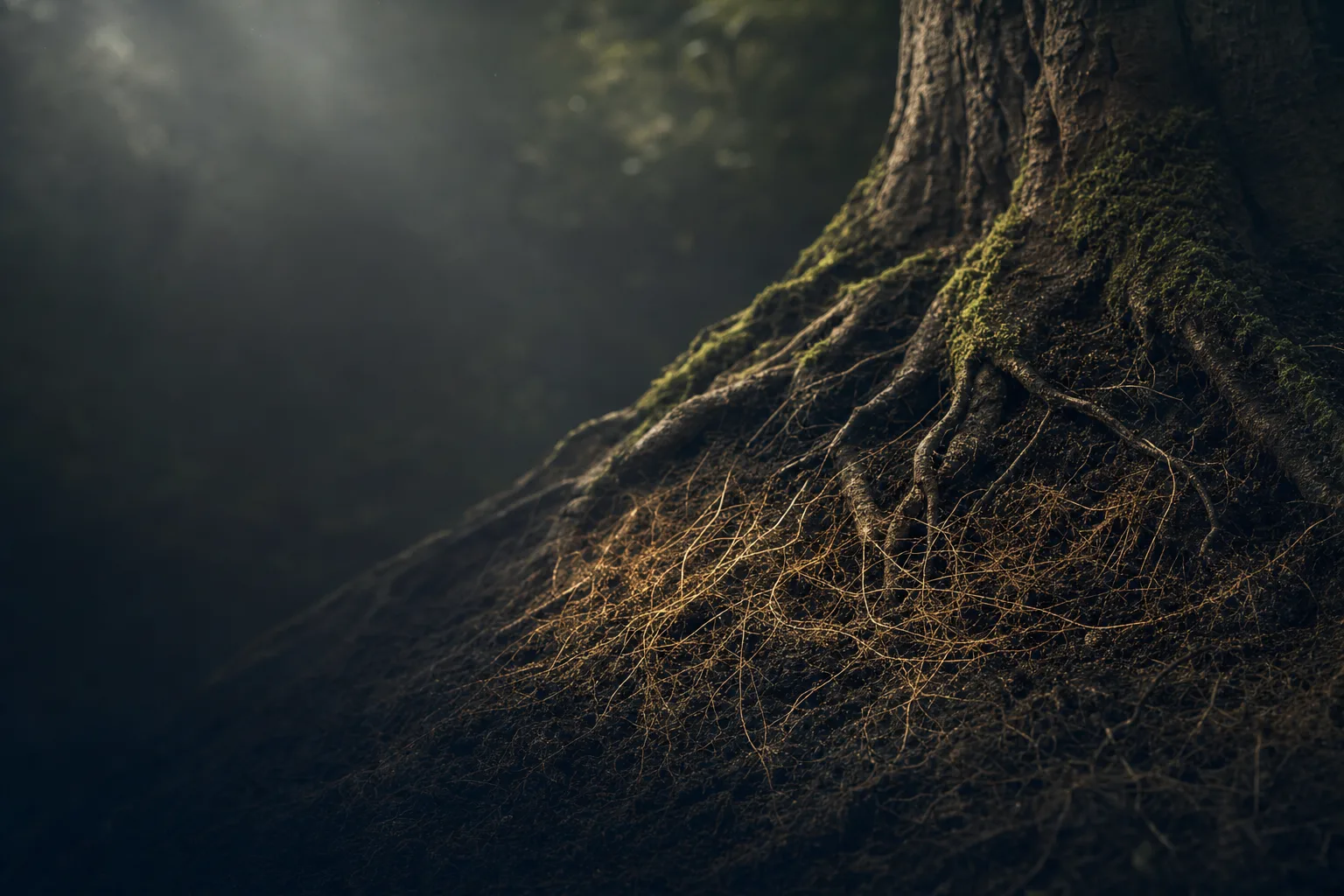
Beneath a quiet forest floor runs a living network of fungi that lets trees share food, water, and even warnings.
A forest looks like a collection of individuals — separate trees competing for the same light and soil. Dig beneath the surface, though, and a very different picture emerges. The roots of those trees are laced together by threads of fungus so fine and so dense that a single teaspoon of forest soil can hold miles of them, forming a network that links tree to tree.
This partnership is ancient and mutual. The fungi wrap around and even enter the roots, dramatically extending a tree ability to draw water and nutrients from the soil. In exchange, the tree pays the fungi in sugar, the energy it captures from sunlight. Neither partner could thrive alone; together they build the hidden infrastructure of the whole forest.
What astonished researchers is what moves along these threads. Carbon can flow from a large, sunlit tree to a shaded seedling struggling below, effectively subsidizing the young. Water travels toward the parched. There is even evidence that chemical alarm signals pass through the network, so that a tree under attack by insects can prime its neighbors to raise their defenses before the pests arrive.
It would be a mistake to romanticize this into a forest of pure cooperation; the network carries competition and even parasitism as well as generosity. But it demolishes the old image of trees as isolated rivals. A forest behaves, in part, like a single connected system, trading resources and information beneath our feet in ways we are only beginning to map.
Swap in your own notes here: the forest finding that changed how you see a walk in the woods, the limit of the cooperation story worth keeping in mind, and the experiment you would run to learn more. — Written by the editors.